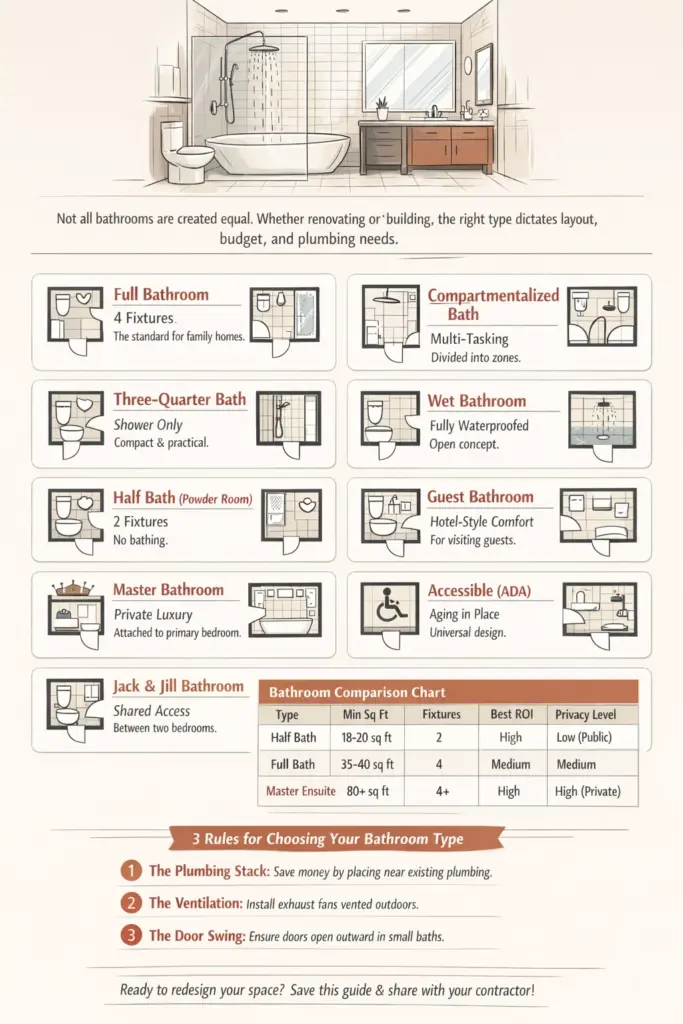
When designing, renovating, or even shopping for a new home, the bathroom is often the most scrutinized space. It is no longer merely a utilitarian room for hygiene; it has evolved into a sanctuary for relaxation, a hub of morning efficiency, and a significant contributor to a property’s resale value. Understanding the different types of bathrooms is crucial for making informed decisions that balance functionality, aesthetics, and spatial constraints.
From the compact powder room to the opulent master ensuite, each bathroom type serves a distinct purpose. This guide delves into the nuances of each style, exploring their definitions, standard components, ideal layouts, and design considerations to help you plan the perfect space for your needs.
1. The Full Bathroom
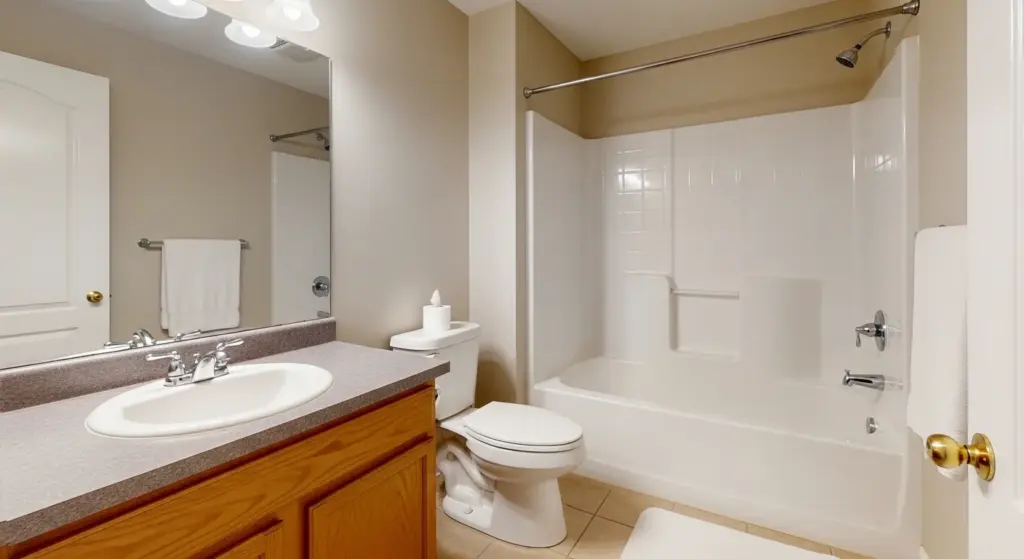
A full bathroom is defined by its capacity to accommodate four primary fixtures: a toilet, a sink (vanity), a bathtub, and a separate shower stall. In the real estate industry, the presence of these four elements qualifies a room as a “full bath.” However, in modern design, the term is often loosely applied to any bathroom that contains a tub-shower combination, even if the shower is not a separate unit.
Variations
- Full Bath with Tub/Shower Combo: The most common configuration, especially in family homes or guest bathrooms. It maximizes space efficiency by combining the shower and tub into one footprint.
- Full Bath with Separate Shower and Tub: Considered a luxury configuration, this requires significant square footage (typically 80 sq. ft. or more). It offers the best of both worlds: a quick, accessible shower and a deep soaking tub for relaxation.
Ideal Placement
Full bathrooms are typically located in hallways to serve secondary bedrooms (known as a “family bath” or “guest bath”) or on the main floor of a home to serve as a primary bathing area for guests who cannot access upper floors.
When optimizing a full bathroom for resale, ensure there is adequate ventilation to handle the moisture from the tub and shower. Use durable flooring like porcelain tile or luxury vinyl plank (LVP) to withstand high traffic. Neutral color palettes tend to appeal to the broadest range of potential buyers.
2. The Three-Quarter Bathroom
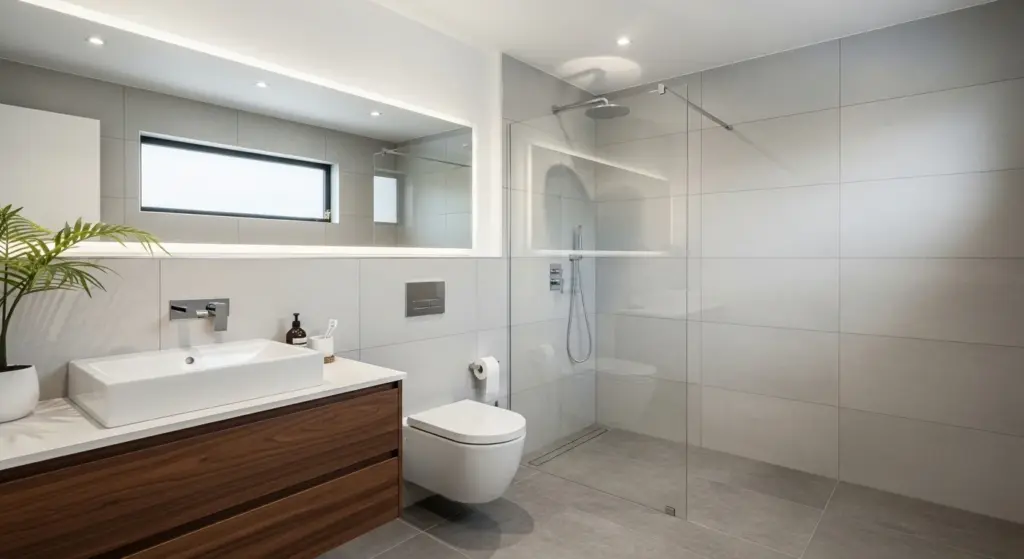
Often confused with a full bath, a three-quarter bathroom contains three fixtures: a toilet, a sink, and a standalone shower. It notably lacks a bathtub. This type of bathroom is a modern solution for homes where a soaking tub is either unnecessary or located elsewhere in the house.
Why Choose a Three-Quarter Bath?
For homeowners who prioritize accessibility and efficiency over luxury bathing, the three-quarter bath is ideal. A walk-in shower with a low threshold (curbless) is significantly easier for elderly individuals or those with mobility issues to navigate than climbing into a bathtub.
Space Efficiency
Because it eliminates the bulk of a bathtub, a three-quarter bath can fit into a relatively small footprint—often as little as 35 to 50 square feet. This makes it perfect for master ensuites in compact homes or for converting underutilized spaces like large closets into functional bathrooms.
3. The Half Bathroom (Powder Room)
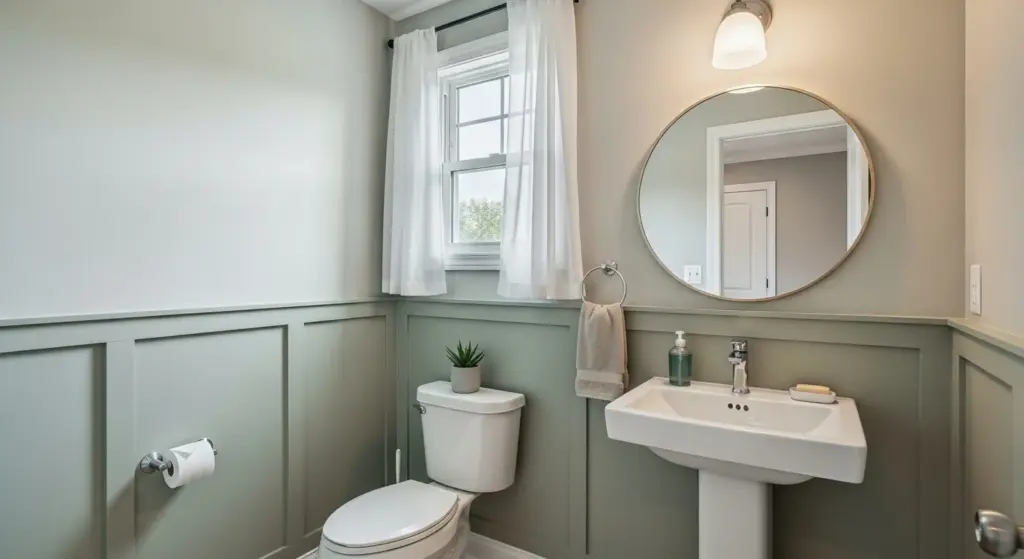
A half bathroom, commonly referred to as a powder room, contains only two fixtures: a toilet and a sink. It is designed for quick use by guests and family members without the need for bathing facilities.
Strategic Placement
The powder room is typically located on the main floor of a home, often near the living room, kitchen, or entryway. Its primary purpose is to provide a convenient restroom for visitors without allowing them access to the private areas of the house (like bedrooms where full baths are located).
Design Strategy
Because powder rooms are small and used for short durations, they are the perfect place to take design risks. Since they do not require humidity-resistant materials to the same extent as a shower room, homeowners often use bold wallpaper, unique vessel sinks, dramatic lighting, or antique furniture repurposed as vanities to create a high-impact “jewel box” aesthetic.
4. The Master Bathroom (Ensuite)
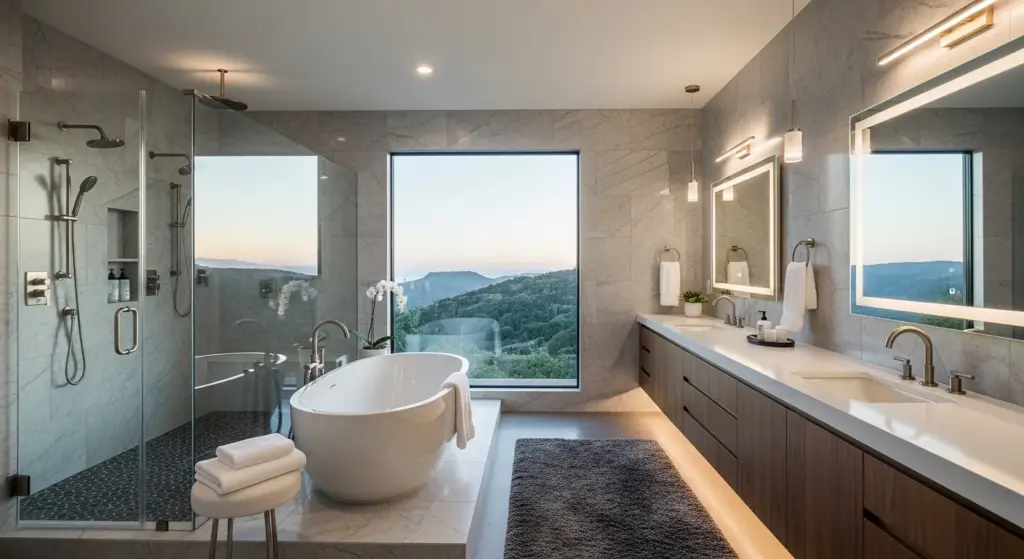
The master bathroom (or primary bathroom) is a private bathroom attached directly to the primary bedroom. It is the most luxurious type of bathroom in a home, designed for privacy and personal retreat.
Common Features
Modern master bathrooms are trending toward spa-like minimalism. Common features include:
- Dual Vanities: Two separate sinks allow two people to prepare for the day simultaneously without congestion.
- Privacy Toilet Closet: A separate compartment within the bathroom for the toilet, allowing one person to use the toilet while another is at the vanity or in the shower.
- Wet Rooms: A growing trend where the shower and bathtub share a common, fully waterproofed area (often a walk-in space with a linear drain), creating an open, accessible layout.
- Heated Floors: Radiant floor heating is a staple in high-end master bathrooms to combat cold tile surfaces.
Sizing
Master bathrooms typically range from 80 to 150 square feet, though luxury homes may feature bathrooms exceeding 200 square feet. The layout must prioritize the flow between the bedroom and the bathroom to create a seamless transition.
5. The Jack and Jill Bathroom
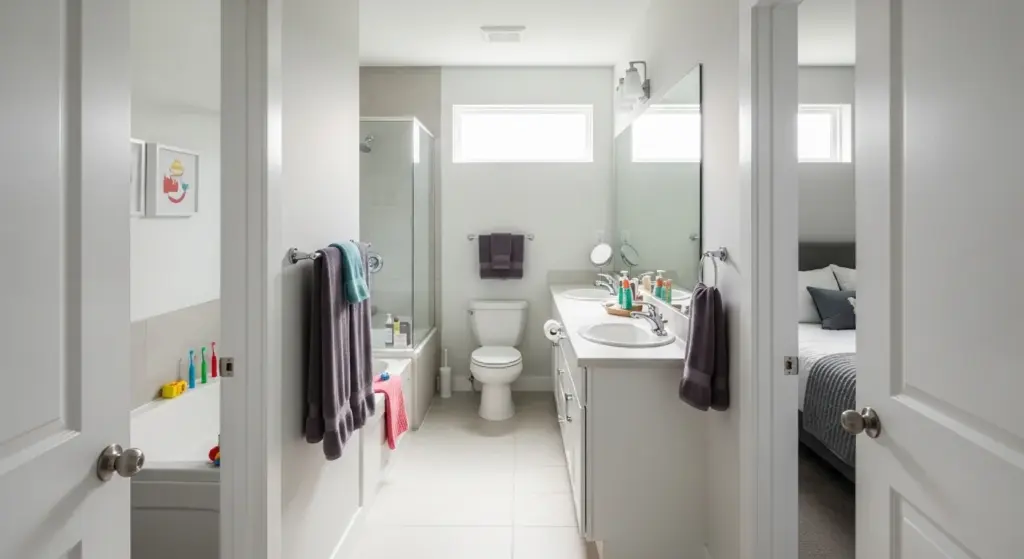
A Jack and Jill bathroom is a bathroom located between two separate bedrooms (usually children’s bedrooms) with direct access from each room. It typically contains a full bath configuration (tub/shower, toilet, vanity) but often features a unique layout designed for sharing.
Layout Variations
- Standard Shared: The bathroom is accessed via doors from each bedroom. The entire bathroom is shared, meaning privacy locks must be managed carefully.
- Split Layout: A popular variation where the vanity area (sink) is located in a shared anteroom accessible to both bedrooms, while the toilet and tub/shower are located in a separate inner compartment with its own lock. This allows one child to brush their teeth while another showers in privacy.
Functionality
When designing a Jack and Jill, acoustics are critical. Soundproofing insulation between the bedrooms and the bathroom is essential to prevent noise from waking the other occupant. Pocket doors are often preferred over swinging doors to save space and reduce the risk of doors colliding.
6. The Compartmentalized Bathroom
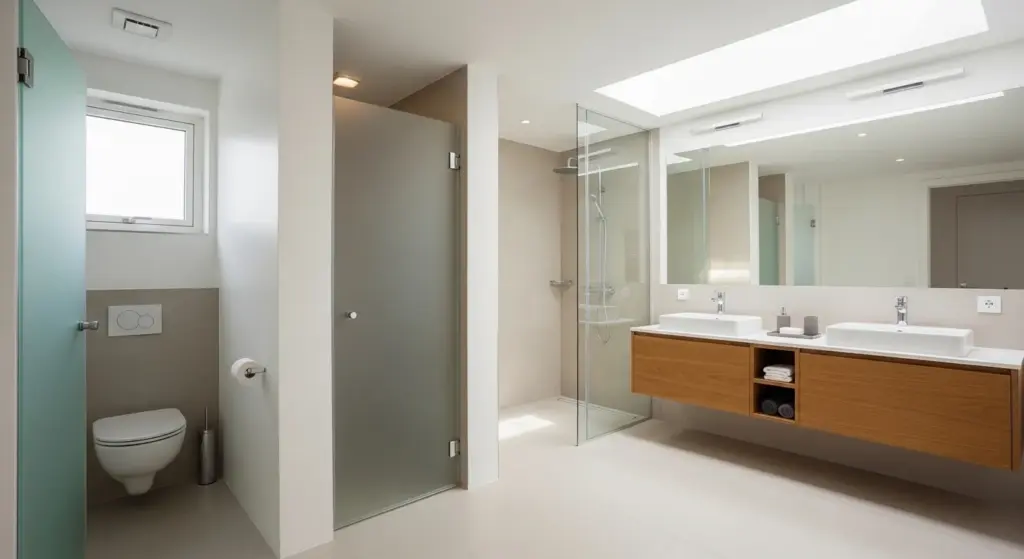
The compartmentalized bathroom is a design philosophy rather than a specific fixture count. It divides the bathroom into separate zones or “compartments” to allow multiple people to use different functions of the room simultaneously.
Common Configurations
- Three-Way Split: The toilet is in one compartment, the shower/tub is in another, and the vanity is in a third, central area. This is ideal for busy family mornings.
- Vestibule Style: The vanity is located just outside the shower/toilet area, acting as a buffer between the bathroom and the main living space or bedroom.
Advantages
Unlike a traditional “one-user-at-a-time” bathroom, a compartmentalized layout maximizes efficiency. It ensures that while one person is showering, another can use the toilet, and a third can dry their hair at the vanity without interference.
7. The Wet Bathroom
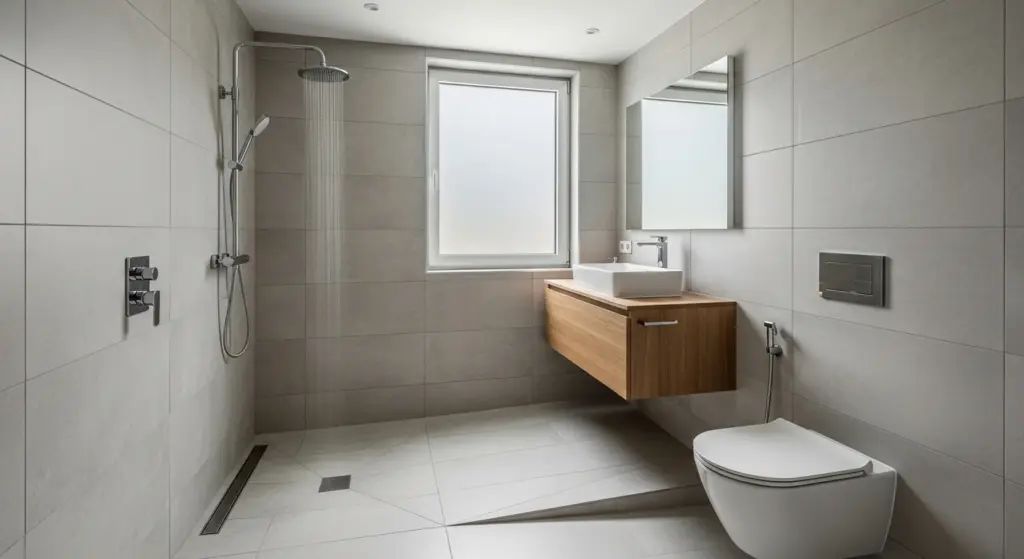
Popular in Asian and European design, the wet bathroom is a small, fully waterproofed space where the shower is not separated by a door or curtain. Instead, the entire floor slopes toward a central drain, and the shower head is mounted on the wall, often adjacent to the toilet and sink.
Modern Adaptations
In Western design, the “wet room” concept has been adapted into luxury settings. It usually involves a walk-in shower area that is partially open but separated by a glass partition (rather than a full door). This allows for a sleek, minimalist aesthetic and is highly accessible for wheelchair users as there are no curbs or steps to navigate.
Considerations
Wet bathrooms require meticulous waterproofing of the entire floor and lower walls. Proper slope (gradient) in the subfloor is critical to ensure water flows toward the drain rather than pooling around the toilet base.
8. The Guest Bathroom
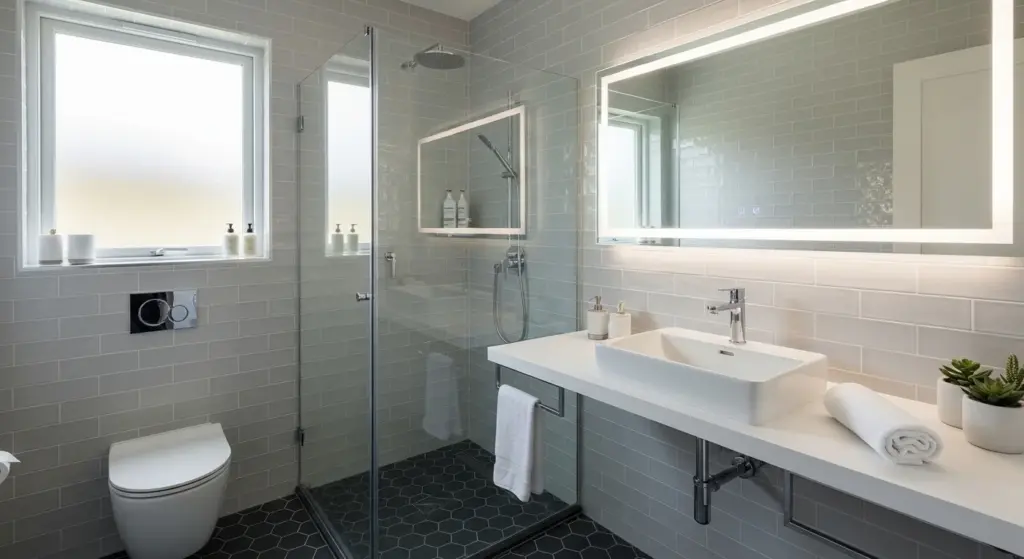
A guest bathroom is typically a full or three-quarter bathroom located near guest bedrooms or common areas. Its primary function is to provide privacy and comfort for visitors staying overnight.
Design Focus
Unlike a powder room (which is for quick use), a guest bathroom must offer the same level of functionality as a family bathroom but with a focus on “hotel-like” amenities. Designers often focus on:
- Storage: Providing empty shelves or baskets for guests to place their toiletries.
- Linen: Ensuring clean towels and washcloths are readily accessible.
- Neutrality: Avoiding overly personal decor to make guests feel comfortable.
9. The Compact/One-Quarter Bathroom
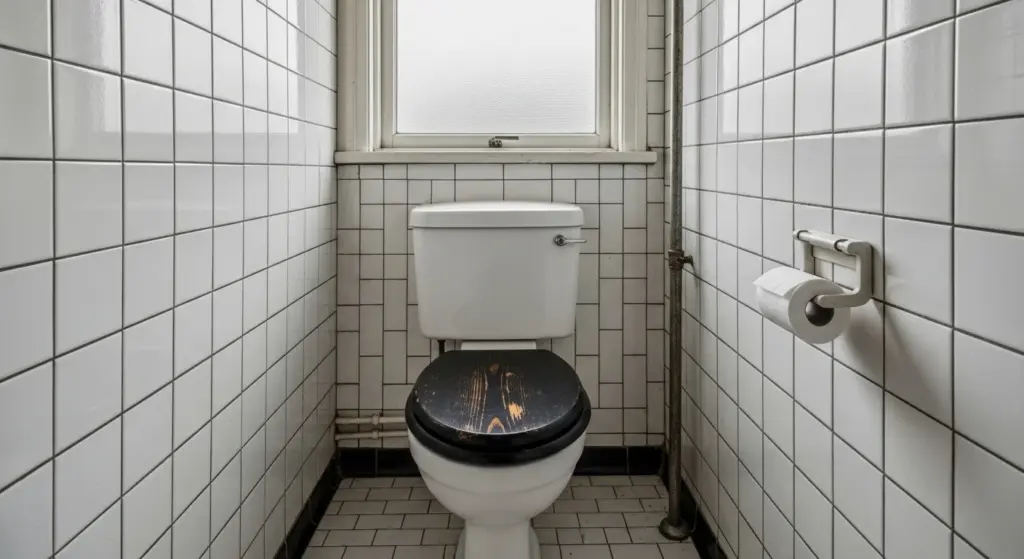
A one-quarter bathroom is the smallest classification. It typically contains only a toilet or a shower (rarely both in modern US codes, though historically seen in “water closets”).
Modern Utility
In modern construction, this is often referred to as a utility toilet room or pool bath. These are commonly found in homes with swimming pools or large gardens. Located near a back entrance or patio, they allow guests or family members to use the toilet or rinse off without tracking water or dirt through the main house.
10. The Accessible Bathroom (ADA & Universal Design)
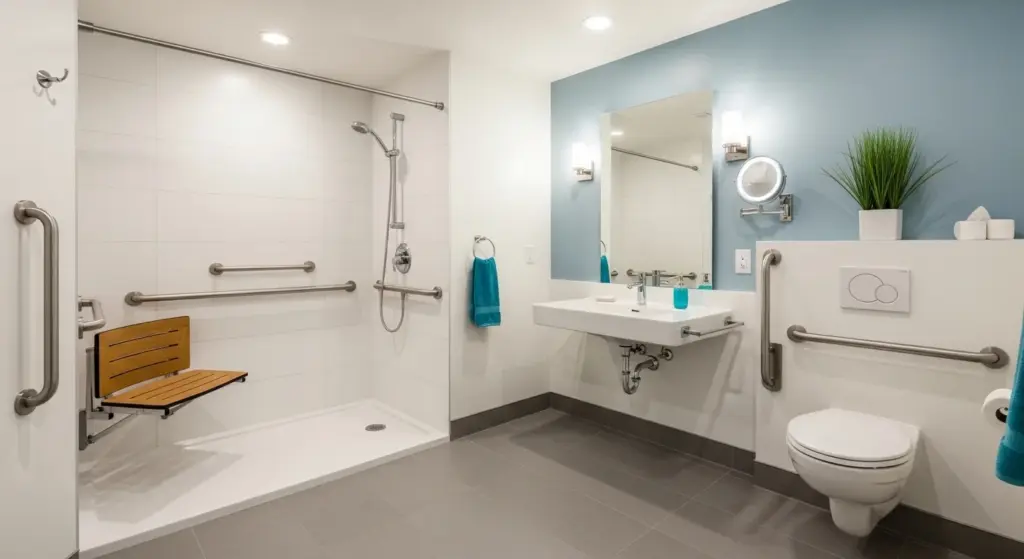
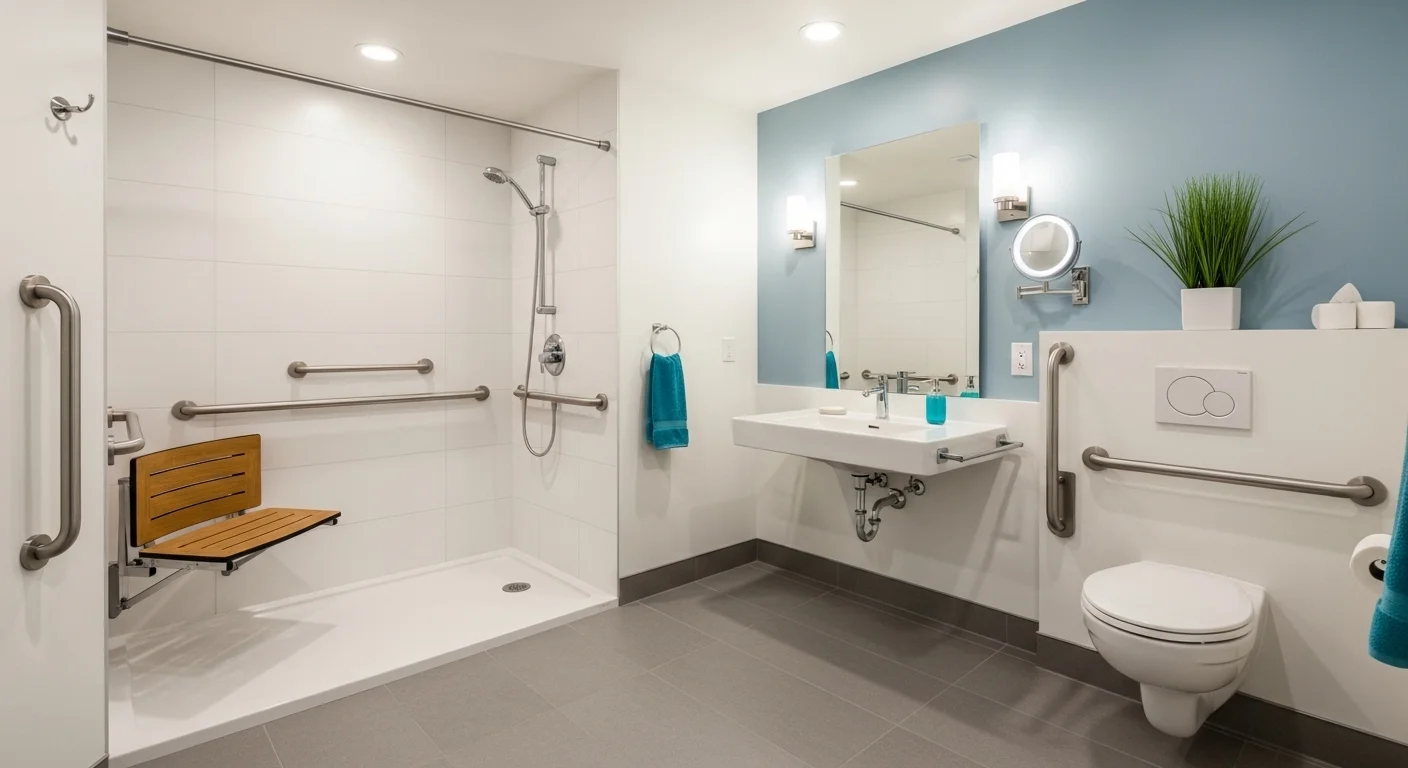
An accessible bathroom is designed to accommodate individuals with disabilities or mobility limitations. While often associated with public buildings (ADA compliance), accessible design principles—known as Universal Design—are increasingly common in private residential construction to allow for “aging in place.”
Key Features
- Wheelchair Turning Radius: A minimum clear floor space of 60 inches in diameter to allow a wheelchair to turn.
- Curbless Showers: No threshold to trip over or roll over.
- Grab Bars: Reinforced walls to support grab bars near the toilet and shower, often installed flush with the wall to look like towel bars.
- Comfort Height Toilets: Toilets that are 17 to 19 inches high (similar to a standard chair) to ease sitting and standing.
- Lever Handles: Faucet handles and door levers that do not require a tight grip to operate.
How to Choose the Right Type for Your Home
Selecting the right bathroom type depends on several key factors:
1. Home Size and Bedroom Count
Real estate standards often dictate that a home should have at least one full bathroom for every two bedrooms. A 3-bedroom home typically requires at least 1.5 to 2 bathrooms to be competitive in the market.
2. Lifestyle Needs
- Families with Children: Benefit from Jack and Jill layouts, compartmentalized bathrooms, or a full family bath with a tub for bathing small children.
- Empty Nesters or Aging Individuals: Prefer master ensuites with curbless showers and comfort-height fixtures to future-proof the home.
- Frequent Entertainers: Require a main-floor powder room to keep guests away from private bedroom suites.
3. Budget Constraints
- Adding a half bath is often the highest return on investment (ROI) for home renovations, as it adds significant functionality for a relatively low cost (often using existing plumbing stack walls).
- Full baths are expensive additions due to the need for water supply, drainage, ventilation, and waterproofing for the tub/shower area.
4. Ventilation and Plumbing
Regardless of the type, all bathrooms require proper ventilation. A bathroom without a window must have an exhaust fan vented to the outdoors to prevent mold and mildew. Furthermore, the location of the bathroom relative to the home’s main soil stack dictates plumbing costs; placing a bathroom directly above or adjacent to an existing bathroom is significantly cheaper than adding one in a remote location.
Future Trends in Bathroom Types
The evolution of the bathroom continues. Current trends influencing bathroom classification include:
- The Smart Bathroom: Integrating technology into all types. This includes smart toilets (with bidet functions, heated seats, and auto-open lids), digital shower systems that control temperature via an app, and anti-fog smart mirrors.
- The Spa Bathroom: Even in smaller spaces, homeowners are opting for “spa-like” features. This blurs the line between the three-quarter bath and the master bath, focusing on high-end materials like natural stone, rainfall showerheads, and steam generators.
- The Outdoor Bathroom: A rising trend in warm climates, the “outdoor bathroom” is an extension of the home, often classified as a half or three-quarter bath located on a pool deck or in a garden, built with weather-resistant materials for a unique bathing experience.
Conclusion
The classification of a bathroom goes far beyond counting fixtures. Whether it is a full bath serving a bustling family, a powder room offering a moment of style for guests, or a wet room providing accessible luxury, each type serves a unique architectural and functional role.
When planning your home’s layout or renovation, consider not just your current needs, but how your lifestyle might evolve. A home that balances the efficiency of compartmentalized family baths with the privacy of a master ensuite offers the best of both worlds. By understanding the distinct characteristics, spatial requirements, and design opportunities of each bathroom type, you can create a home that is not only beautiful but also seamlessly functional for years to come.
Frequently Asked Questions (FAQ)
Q: Can a bathroom with a shower but no tub be considered a full bath?
A: Technically, for real estate listing purposes, a “full bath” usually requires a tub. However, a three-quarter bath (shower, toilet, sink) is often accepted as a full bath in casual conversation, but it may affect appraisal value if replacing a tub in a family home.
Q: What is the smallest size for a half bath?
A: The absolute minimum for a half bath (toilet and sink) is typically 3 feet by 6 feet (18 sq ft), though a more comfortable standard is 4 feet by 4 feet (16-20 sq ft) or 4 feet by 8 feet for added elbow room.
Q: Is a Jack and Jill bathroom considered a shared bathroom or an ensuite?
A: It is a shared bathroom. While it is directly accessible from the bedrooms, it is not private to one specific bedroom, so it does not qualify as a “master ensuite.”
Q: What is the best flooring for a wet bathroom?
A: Porcelain tile is the gold standard for wet bathrooms because it is impervious to water (unlike ceramic, which can be porous). Large-format tiles with textured finishes (to prevent slipping) are preferred to minimize grout lines.
Q: How many bathrooms should a 4-bedroom house have?
A: Ideally, a 4-bedroom house should have at least 2.5 bathrooms: a master ensuite, a hall/family full bath for the remaining three bedrooms, and a half bath (powder room) for guests on the main floor.