
Bathroom Renovation Estimator
Calculate the cost of your dream bathroom with US market averages.
Room Dimensions
Enter the length and width of your bathroom floor area in feet.
Select Finishing Level
Choose the quality of materials and fixtures that matches your vision.

Cost Breakdown
Estimated costs based on National Averages (USD).
| Category | Est. Cost |
|---|
*Disclaimer: This tool provides a rough estimate for planning purposes only. Actual costs vary significantly by location (ZIP code), existing conditions, and specific material choices. Labor rates are based on national averages.
Understanding the Bathroom Renovation Cost Calculator
Planning a bathroom renovation is one of the most exciting yet daunting home improvement projects. It promises a significant return on investment (ROI) and enhanced daily living, but the path from inspiration to completion is often paved with complex budgeting decisions. This is where the Bathroom Renovation Cost Calculator becomes an indispensable tool. This guide provides a comprehensive overview of how the calculator works, the variables that influence pricing, and how to use the data to manage your project successfully. Remember, all prices and estimates provided are subject to variance based on location, material availability, and contractor rates.
How the Bathroom Renovation Cost Calculator Works
The Bathroom Renovation Cost Calculator is designed to move beyond simple guesswork. Instead of providing a single, static number, it uses a parametric model that breaks down a renovation into its core components. By inputting specific details about your project, the tool generates a realistic budget range.
The calculator typically processes three primary categories of data:
- Scope of Work: Determines whether the project is a cosmetic refresh, a mid-range remodel, or a full gut renovation involving structural changes.
- Bathroom Size & Layout: Inputs regarding square footage and whether plumbing fixtures are moving from their original locations.
- Material Quality: Selections ranging from economy/builder-grade to high-end/luxury finishes.
The output is usually presented as a low-end, mid-range, and high-end cost estimate. This tiered structure helps users visualize how choices in materials and labor complexity directly impact the final invoice. By using this tool, homeowners can establish a baseline budget before stepping into a showroom or hiring a contractor, ensuring they are armed with realistic expectations.
Key Cost Factors That Influence Your Renovation Budget
To use the calculator effectively, it is crucial to understand the variables driving the numbers. No two bathroom renovations are identical, and the final cost is a function of several interconnected factors.
1. Bathroom Size and Scope
The size of the bathroom is the most obvious cost driver. A powder room (half-bath) is significantly cheaper to renovate than a master ensuite due to the volume of materials and labor required.
- Powder Room (15-25 sq ft): Primarily involves a toilet, sink, and minor flooring. Costs are lower because there is no tub or shower enclosure.
- Full Bath (40-80 sq ft): Includes a tub/shower combo, toilet, vanity, and flooring. This is the most common renovation type.
- Master Bath (100+ sq ft): Often involves double vanities, large walk-in showers, freestanding tubs, and high-end tiling, resulting in exponentially higher costs.
2. The Cost of Labor vs. Materials
A healthy rule of thumb for bathroom renovations is that labor accounts for 40% to 60% of the total budget, while materials account for the remainder. Skilled trades—plumbers, electricians, tilers, and carpenters—command high rates. Moving plumbing or electrical lines to accommodate a new layout significantly increases labor hours compared to replacing fixtures in the same locations.
3. Geographic Location
Prices vary dramatically by region. Urban centers with a high cost of living (e.g., New York, San Francisco, London) see labor rates that are 20% to 50% higher than rural areas. Permitting fees also vary by municipality.
4. Hidden Structural Issues
One of the primary reasons renovations exceed budget is the discovery of hidden damage. The calculator accounts for a contingency (typically 10-20%), but actual costs can rise if contractors find:
- Water damage or rot in the subfloor
- Mold remediation
- Outdated galvanized plumbing or knob-and-tube wiring
- Asbestos or lead paint in homes built before 1980
Detailed Price Breakdown by Renovation Type
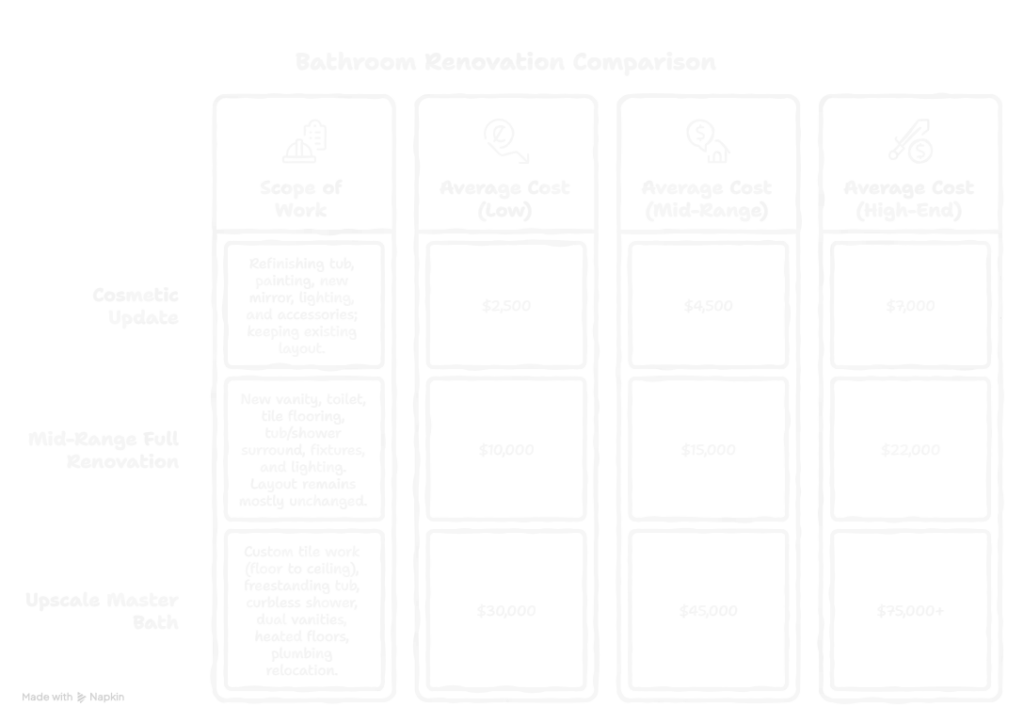
To provide clarity, the following table outlines estimated costs for three distinct types of bathroom renovations. These figures are national averages and prices may vary based on the factors listed above.
| Renovation Type | Scope of Work | Average Cost (Low) | Average Cost (Mid-Range) | Average Cost (High-End) |
|---|---|---|---|---|
| Cosmetic Update | Refinishing tub, painting, new mirror, lighting, and accessories; keeping existing layout. | $2,500 | $4,500 | $7,000 |
| Mid-Range Full Renovation | New vanity, toilet, tile flooring, tub/shower surround, fixtures, and lighting. Layout remains mostly unchanged. | $10,000 | $15,000 | $22,000 |
| Upscale Master Bath | Custom tile work (floor to ceiling), freestanding tub, curbless shower, dual vanities, heated floors, plumbing relocation. | $30,000 | $45,000 | $75,000+ |
Material Quality Tiers and Price Variance
Your choice of materials is the most controllable variable in the renovation process. The Bathroom Renovation Cost Calculator allows users to toggle between quality tiers to see how finishes affect the bottom line.
Vanities and Cabinetry
- Economy: Stock vanities from big-box stores. Limited sizes (24, 30, 36 inches). Laminate or thermofoil finishes. Cost: $150 – $400
- Mid-Range: Semi-custom cabinets with plywood boxes and hardwood doors. Quartz or solid surface countertops. Cost: $800 – $2,500
- High-End: Custom millwork, handcrafted wood, marble countertops, and designer hardware. Cost: $3,000 – $8,000+
Tiling (Flooring and Walls)
- Economy: Ceramic tile (8×8 or 12×12) in standard patterns. Material Cost: $1 – $3/sq ft | Installation: $5 – $8/sq ft
- Mid-Range: Porcelain tile (larger formats or wood-look planks), glass mosaics for accents. Material Cost: $4 – $10/sq ft | Installation: $8 – $15/sq ft
- High-End: Natural stone (marble, travertine, slate), intricate patterns (herringbone), large-format slabs. Material Cost: $15 – $30+/sq ft | Installation: $15 – $30+/sq ft (due to complexity)
Plumbing Fixtures
- Economy: Basic chrome faucets and showerheads from mass-market brands. Cost: $50 – $150 per fixture
- Mid-Range: Brushed nickel or matte black finishes from reputable brands (Delta, Kohler, Moen). Pressure-balancing valves. Cost: $200 – $600 per fixture
- High-End: Designer brands (Waterworks, Rohl), thermostatic digital showers, rain heads, and body sprays. Cost: $800 – $2,500+ per fixture
The Step-by-Step Guide to Using the Calculator
To maximize the accuracy of the Bathroom Renovation Cost Calculator, follow this structured guide. Inputting precise information ensures the output reflects reality.
Step 1: Define the Project Scope
Begin by selecting the scope of your renovation. Be honest about whether you are simply replacing fixtures or planning to demolish walls. If you plan to move the toilet or shower drain, select the option for “Layout Change,” as this activates plumbing rough-in costs which are substantial.
Step 2: Measure Your Space
Accurate measurements are vital. You will need:
- Floor Area: Length x Width (to calculate tile, underlayment, and labor).
- Wall Area: Height x Width for tiling (if doing a full surround or wainscoting).
- Fixture Count: Number of toilets, sinks, and showers.
Step 3: Select Material Grades
Be specific with your selections. The calculator aggregates costs based on averages. For example, if you choose “Mid-Range” for tile but “High-End” for the vanity, the tool adjusts the algorithm to reflect a mixed-material budget.
Step 4: Review the Contingency Fund
A critical feature of the calculator is the automatic contingency addition. If the tool suggests setting aside 15% for “unexpected issues,” do not remove this. This fund is not an upsell; it is the financial buffer that prevents a project from stopping mid-way due to water damage or code violations.
Step 5: Analyze the Line-Item Summary
A robust calculator provides a line-item breakdown. Review the costs for:
- Demolition and Dump Fees
- Rough-In Plumbing/Electrical
- Waterproofing (Crucial for showers)
- Tile Installation
- Fixtures and Finishes
- Final Trim and Paint
Strategies to Manage Price Variance
Since prices vary significantly based on market conditions and material availability, using the calculator strategically can help you stay within budget. Here are five actionable strategies derived from the tool’s logic.
1. Keep the Layout Intact
The most effective way to control costs is to keep the toilet, sink, and shower/tub in their existing locations. Moving drains requires opening floors, reconfiguring waste lines, and extensive carpentry. By keeping the “footprint,” you can save $3,000 to $8,000 in plumbing rough-in costs.
2. Mix High and Low Materials
The calculator allows you to mix tiers. A common strategy is to invest in high-quality, durable items that are difficult to replace later (such as shower valves and waterproofing) while saving on easily swappable items (such as mirrors, lighting, and accessories).
3. Consider Refinishing Instead of Replacing
If your bathtub or tiles are structurally sound but dated, the calculator may show a significant cost reduction if you select “Refinish” instead of “Replace.” Refinishing a cast iron tub costs $400 to $600, compared to $1,500 to $3,500 for a new tub and installation.
4. Account for Seasonal Labor Rates
Prices may vary by season. In many regions, contractors are busiest in the spring and summer, leading to higher labor quotes. If your timeline allows, using the calculator to plan a project for late fall or winter may result in lower labor bids.
5. Verify Permit Requirements
Some users are surprised when the calculator adds permit fees. While not all cosmetic updates require permits, structural, electrical, and plumbing work do. Unpermitted work can cause issues during home resale. The cost of permits typically ranges from $200 to $1,500 depending on your location.
Final Guide to Using Your Estimate
Once the Bathroom Renovation Cost Calculator has provided your estimate, you have a powerful document to guide your project. Here is how to use the output effectively:
- Validate Against Quotes: Use the line-item summary to compare contractor bids. If a contractor’s quote is significantly lower than the calculator’s mid-range estimate, verify what materials they are quoting for. If it is much higher, ask about scope creep or structural complexities.
- Set Your Budget Ceiling: The calculator’s high-end estimate should serve as your “walk-away” point. If contractor bids exceed this, it is time to revisit material selections or simplify the scope.
- Schedule Phases: If the total cost exceeds your current liquidity, use the breakdown to phase the project. You might complete demolition and rough-in (the noisy, dusty part) in one month, and delay the installation of high-end mirrors and accessories for a few months later.
Conclusion
The Bathroom Renovation Cost Calculator is more than a number generator; it is a strategic planning tool that demystifies the complexities of construction costs. By understanding the data presented—from the impact of tiling choices to the necessity of contingency funds—you can navigate your renovation with confidence. Remember that prices may vary based on your specific location, the volatility of material supply chains, and the unique characteristics of your home. Use this guide alongside the calculator to create a realistic budget that aligns your dream bathroom with your financial comfort zone, ensuring a successful project from demo day to the final reveal.